





Owolabi University Faculty of Science & Computing
Building strength in digital technology, computing, and the natural sciences – the foundation of a newly established private university with a scientific and technological orientation.
Faculty of Science & Computing
Building strength in digital technology, computing, Microbiology and Science Laboratory Technology, forming the cornerstone of Owolabi University's scientific and technological orientation.
The Faculty of Science and Computing will prepare graduates to solve complex technical challenges, lead digital transformation, and advance scientific discovery. Students gain practical hands-on experience in software engineering, cybersecurity, computing infrastructure, and modern diagnostic laboratory sciences.
Designed in strict alignment with the National Universities Commission (NUC) Core Curriculum and Minimum Academic Standards (CCMAS), our programmes integrate strong theoretical foundations with intensive practical industry skills, research projects, and entrepreneurship modules.
Departments & Programmes
Owolabi University launches Science and Computing with six core departments and accredited degree programmes:
Computer Science
B.Sc. Computer Science
Algorithms, artificial intelligence, database systems,
web engineering, and computational intelligence.
Cybersecurity
B.Sc. Cybersecurity
Network security, digital forensics, ethical hacking,
cryptography, and information defense systems.
Software Engineering
B.Sc. Software Engineering
Full-stack software architecture, mobile app
engineering, DevOps, and agile system design.
Information Technology
B.Sc. Information Technology
Enterprise IT infrastructure, cloud computing,
systems administration, and digital service delivery.
Microbiology
B.Sc. Microbiology
Medical microbiology, industrial fermentation, environmental
microbiology, and microbial genetics.
Science Laboratory Technology
B.Sc. Science Laboratory Technology
Analytical instrumentation, biological and
chemical laboratory techniques, and quality control management.
Programme Structure & Progression
Academic study in the Faculty of Science and Computing follows a structured progression over four academic sessions:
- 100 Level: Foundational courses in Mathematics, General Physics, General Chemistry, Introduction to Computer Science, and General Studies (GST).
- 200 Level: Core departmental courses, data structures, object-oriented programming, microbial physiology, and laboratory analytical techniques.
- 300 Level: Advanced software architecture, network defense, industrial microbiology, Students' Industrial Work Experience Scheme (SIWES), and entrepreneurship modules.
- 400 Level: Specialized electives, research methodology, industrial seminars, and an original final-year capstone research project.
Core Curriculum Areas
Programming languages, data structures, algorithm design, software architecture, mobile systems, and cloud computing platforms.
Network security protocols, digital forensics, cryptography, operating system defense, and ethical hacking methodologies.
Microbial physiology, medical microbiology, industrial biotechnology, environmental safety, and microbial genetics.
Analytical instrumentation, laboratory quality assurance, chemical safety management, and diagnostic procedures.
Curriculum Overview
The curriculum is designed in strict compliance with NUC CCMAS benchmarks, combining foundational science, specialized discipline courses, general studies, and practical industrial experience.
Programme Directory & Duration
Summary of take-off degree offerings, qualifications awarded, and standard academic durations:
| Department | Degree Awarded | UTME Duration |
|---|---|---|
| Computer Science | B.Sc. Computer Science | 4 Years (8 Semesters) |
| Cybersecurity | B.Sc. Cybersecurity | 4 Years (8 Semesters) |
| Software Engineering | B.Sc. Software Engineering | 4 Years (8 Semesters) |
| Information Technology | B.Sc. Information Technology | 4 Years (8 Semesters) |
| Microbiology | B.Sc. Microbiology | 4 Years (8 Semesters) |
| Science Laboratory Technology | B.Sc. Science Laboratory Technology | 4 Years (8 Semesters) |
Credit Breakdown & Graduation Requirements
To qualify for the award of a B.Sc. degree in the Faculty of Science and Computing, candidates must complete the following minimum credit unit requirements:
| Course Category | Description | Minimum Credit Units |
|---|---|---|
| General Studies (GST) | English, Philosophy, Nigerian Peoples & Culture, Peace Studies, Digital Literacy | 12 - 14 Credits |
| Entrepreneurship (ENT) | Venture Creation, Business Planning & Skill Acquisition | 4 Credits |
| Faculty Core Courses | General Mathematics, Physics, Chemistry, Biology & Computing Principles | 24 - 30 Credits |
| Departmental Core & Electives | Specialized discipline courses, practical laboratories, and final year research project | 80 - 90 Credits |
| Industrial Attachment (SIWES) | Structured 6-month industrial work experience scheme | 6 Credits |
Faculty Members & Academic Staff
Our distinguished faculty members bring extensive academic scholarship, industrial expertise, and scientific research experience to guide students in computing and natural sciences.
Dean
Chief Academic Officer Faculty of Science & ComputingHead of Department
Senior Lecturer & HOD Department of Computer ScienceHead of Department
Associate Professor & HOD Department of CybersecurityHead of Department
Senior Lecturer & HOD Department of Software EngineeringHead of Department
Senior Lecturer & HOD Department of Information TechnologyHead of Department
Reader & HOD Department of MicrobiologyHead of Department
Senior Lecturer & HOD Science Laboratory TechnologyAdmission Requirements
Standard entry requirements for candidate admission into degree programmes in the Faculty of Science and Computing.
01 Computing & IT Programmes
Computer Science, Cybersecurity, Software Engineering, Information Technology
- O'Level Requirements: Five (5) SSCE credit passes in English Language, Mathematics, and three other subjects from Further Mathematics, Physics, Chemistry, Biology, and Agricultural Science (WASSCE, NECO, GCE or NABTEB) obtained at not more than two sittings.
- UTME Subject Combination: English Language, Mathematics, and any two (2) of Physics, Chemistry, and Biology.
02 Biological & Laboratory Science Programmes
Microbiology, Science Laboratory Technology
- O'Level Requirements: Five (5) SSCE credit passes in English Language, Mathematics, Biology, Chemistry, and Physics (WASSCE, NECO, GCE or NABTEB) obtained at not more than two sittings.
- UTME Subject Combination: English Language, Biology, Chemistry, and Physics.
03 General Admission Regulations
- All candidates must attain the minimum acceptable score in the Unified Tertiary Matriculation Examination (UTME) set by JAMB.
- All O'Level results must be verified and obtained at not more than two sittings.
- Candidates must undergo internal verification and complete the Post-UTME Screening successfully.
How to Apply
Applications for Year 1 admission into the Faculty of Science & Computing are open to qualified prospective candidates nationwide.
Begin Your Technical Journey at Owolabi University
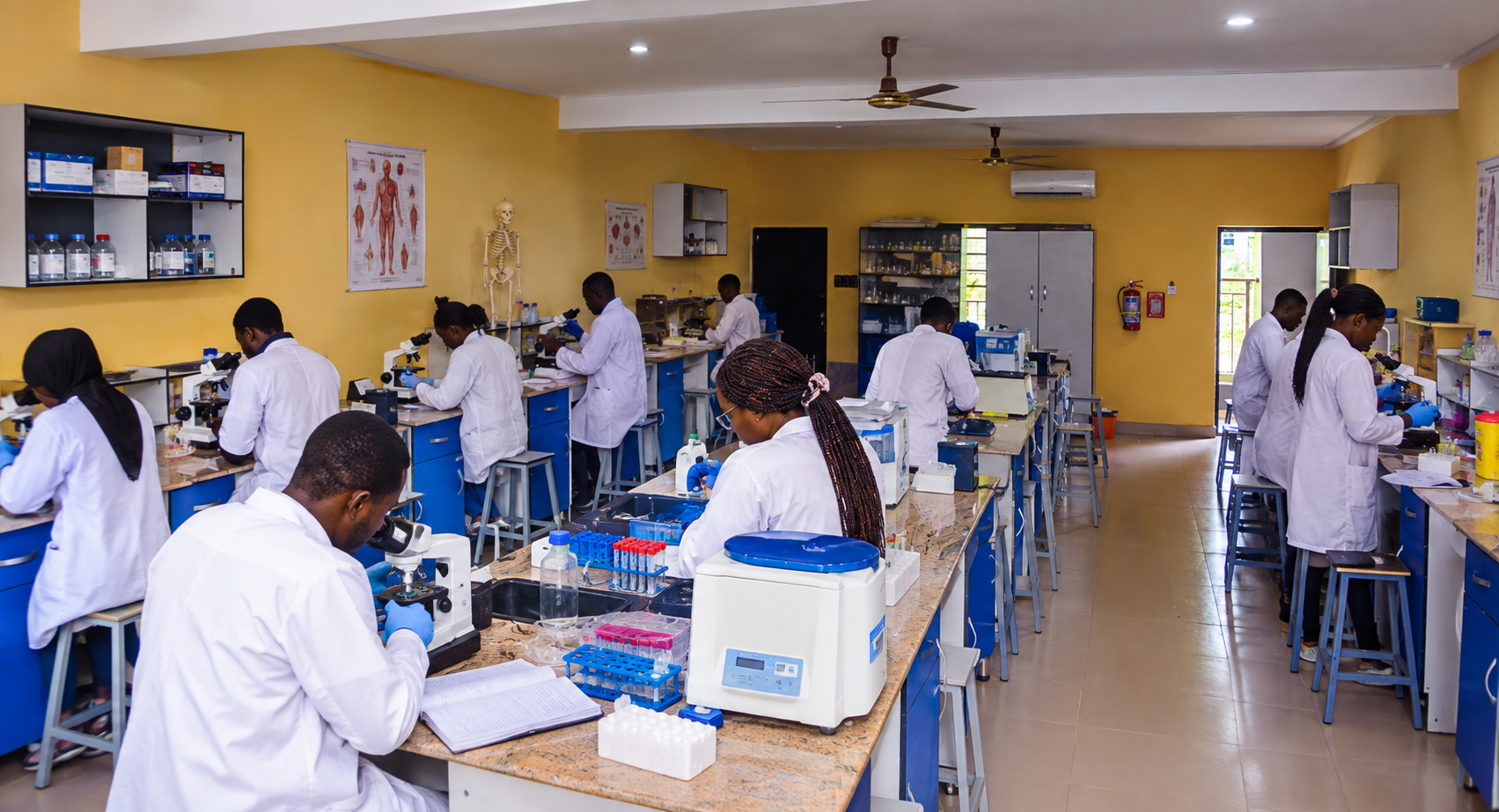
Build strong practical expertise and scientific problem-solving skills in our state-of-the-art laboratories and computing suites.